
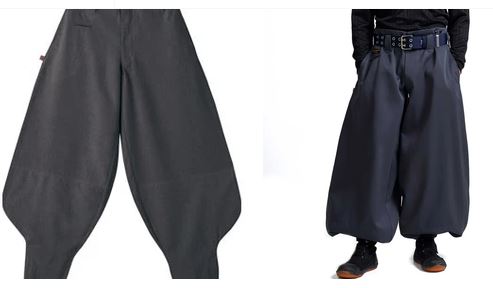
If you have ever seen Japanese construction workers wearing dramatically wide trousers that narrow sharply at the ankle, you have probably encountered tobi pants. Their unusual silhouette can look almost theatrical at first, but the shape comes from a practical workwear tradition rather than fashion alone.
Tobi pants are closely associated with tobi-shoku, specialist construction workers whose jobs can involve scaffolding, steel frameworks and working at height. The trousers are designed around movement: plenty of room through the upper leg, combined with a controlled lower leg that works well with work boots or jika-tabi footwear.
For people searching for Japanese construction pants, understanding this background makes the design easier to appreciate. It also explains why the style has survived as both functional workwear and a recognizable part of Japanese clothing culture.
What Are Tobi Pants?
Tobi pants are distinctive Japanese work trousers characterized by a generous, often balloon-like upper leg and a sharply narrowed lower leg.
The name is connected with the Japanese construction trade known as tobi. In practical terms, the pants are associated particularly with workers who operate around scaffolding and other elevated structures.
Their defining characteristics can include:
- A roomy seat and thigh
- A high or secure waist
- Considerable freedom around the knees
- A tapered or gathered lower leg
- Strong, work-oriented fabrics
- Compatibility with work boots and traditional jika-tabi
- Practical pockets and reinforced construction on many models
The exaggerated proportions are what distinguish tobi pants from ordinary loose-fitting work trousers.
They are not simply oversized pants. The volume and taper serve different purposes.
The upper section gives the wearer freedom to bend, climb and squat, while the lower section keeps excess fabric away from the feet and surrounding equipment.
Where Did Tobi Pants Come From?
The history is more interesting than the simple idea that tobi pants are an ancient Japanese garment.
The modern silhouette developed through the interaction of Japanese workwear culture and Western clothing influences. One documented explanation from Toraichi traces nikka zubon, a closely related trouser style, to Western knickerbockers that entered Japan through military clothing. After the Second World War, surplus clothing also became an important source of affordable workwear, helping the style become established among workers.
Toraichi's own company history records that it began producing and selling nikka zubon in 1960, demonstrating how firmly the style had become part of Japan's modern workwear industry by that period.
That history is worth separating from older Japanese work clothing.
Japan had traditional garments such as momohiki, which workers beneath shorter work jackets wore. However, the modern ballooned nikka/tobi silhouette should not simply be described as an unchanged Edo-period garment. The evidence points to a more complicated evolution involving traditional Japanese work clothing, Western knickerbockers, postwar clothing availability and the needs of the construction industry.
From Knickerbockers to Japanese Construction Pants

The connection with knickerbockers is particularly important.
Western knickerbockers provided a loose trouser shape with a controlled lower leg. Japanese workwear manufacturers and workers adapted this basic concept to local working conditions and construction requirements.
Over time, different proportions emerged.
The relatively moderate nikka zubon became one recognizable version, while much wider variations developed. The amount of volume in the leg could also influence the terminology used for different styles.
This helps explain why searching for tobi pants, nikka pants, or Japanese construction pants can produce products with noticeably different silhouettes.
Why Are Tobi Pants So Baggy?
This is probably the biggest question people have when they first encounter tobi pants.
The answer is mobility.
Construction work can require repeated:
- Squatting
- Climbing
- Stepping onto platforms
- Bending
- Kneeling
- Stretching
- Moving between different working positions
A conventional slim trouser can restrict movement around the hips and knees. Tobi-style trousers provide considerably more fabric and room through these areas.
Historical reporting on Japanese construction clothing notes that the looseness around the knees makes climbing and movement easier, particularly for high-rise workers who repeatedly move up and down scaffolding.
The shape therefore makes more sense when considered from a worker's perspective rather than a fashion perspective.
What looks excessive while standing still can become practical when repeatedly climbing, crouching and reaching.
Why Do Tobi Pants Taper at the Ankle?
The narrow lower leg creates an interesting contrast with the extremely wide upper portion.
A loose ankle could become inconvenient around ladders, scaffolding, tools and other construction equipment. A controlled cuff keeps the fabric closer to the leg and also works naturally with footwear.
Traditional combinations can include jika-tabi, the split-toe footwear associated with Japanese work and outdoor activities. Tobi trousers can also be worn with other work boots.
The design essentially follows a simple principle:
Room where movement is needed; control where loose fabric could become inconvenient.
That principle is one reason the silhouette remains instantly recognizable.
Tobi Pants and the Culture of Japanese Construction Work
Tobi pants became more than functional clothing because workwear can communicate professional identity.
Japanese construction workers developed recognizable clothing systems around their jobs. Tobi clothing was associated with workers who performed demanding tasks at height, making the distinctive trousers part of a visible trade identity.
This is one reason Japanese workwear can feel different from ordinary utility clothing. The garment is not necessarily designed only around generic durability. It can also reflect the specific movements, traditions and culture of a particular occupation.
Photographer Tadao Matsuda's documentation of Japanese construction workers, published by Nippon.com, shows how distinctive nikkapokka trousers became part of the visual identity of construction workers.
The pants therefore developed two meanings at once:
1. Functional equipment for demanding work
2. A recognizable expression of the construction trade
That combination helped them become culturally significant.
How Tobi Pants Became an Icon of Japanese Workwear?
Several factors explain their longevity.
1. A distinctive silhouette
Most work trousers look relatively similar: straight legs, cargo pockets or conventional utility cuts.
Tobi pants are different immediately.
The dramatic transition from a wide thigh to a narrow ankle makes them recognizable from a distance. That visual identity helped separate them from ordinary trousers.
2. Practical design
The style was not created simply to look unusual.
Its connection with climbing, squatting and working around scaffolding gave the silhouette a functional reason to exist. That practical foundation helped it survive changes in fashion.
3. Strong trade identity
Tobi clothing became associated with a particular type of skilled construction work.
As with many occupational uniforms, repeated use helped transform practical clothing into a recognizable symbol of the profession.
4. Dedicated manufacturers
Japanese workwear companies helped preserve and refine the style.
Toraichi, for example, began producing nikka trousers in 1960 and later continued developing variations of its traditional silhouettes. Its modern archive describes its knickerbockers as a workwear design rooted in the history of tobi clothing.
5. Fashion reinterpretation
The silhouette eventually moved beyond construction sites.
Toraichi has produced modern versions of its traditional nikka silhouette specifically for streetwear, while contemporary collaborations have also incorporated the shape into fashion-oriented collections.
This transition demonstrates something important about heritage workwear: distinctive functional clothing can become fashionable precisely because its original purpose gives it character.
Tobi Pants vs. Ordinary Japanese Work Pants
Not every Japanese work trouser is a tobi pant.
|
Feature |
Tobi Pants |
Conventional Work Pants |
|
Upper leg |
Very roomy |
Usually straight or moderately relaxed |
|
Lower leg |
Strongly tapered |
Usually straight or mildly tapered |
|
Mobility |
Designed for substantial movement |
Depends on the individual design |
|
Appearance |
Dramatic and distinctive |
More conventional |
|
Construction association |
Strongly linked with tobi work |
Broad range of trades |
|
Footwear |
Often suited to work boots/jika-tabi |
Usually standard work footwear |
|
Fashion appeal |
Recognizable heritage silhouette |
Depends on style |
The terms tobi and nikka can overlap in everyday product descriptions, so shoppers should examine the actual cut rather than relying only on the product name.
What Makes Good Tobi Pants?
If you are buying tobi pants as genuine Japanese workwear rather than simply choosing an oversized fashion trouser, pay attention to construction.
Fabric
The material should suit the intended use.
For physical work, durability and resistance to repeated wear matter. Contemporary Japanese manufacturers use different fabric compositions depending on the product, including cotton blends and synthetic fabrics. For example, Toraichi's current knickerbocker products include polyester-cotton fabrics and work-oriented materials.
Waist and rise
A secure waist matters when frequently bending, climbing or reaching.
Check the manufacturer's measurements rather than assuming your usual Western trouser size will fit identically.
Cuff design
Look closely at how the lower leg closes.
A cuff, tie, elastic section or other controlled finish affects how the trousers sit over footwear.
Intended use
A pair designed as streetwear may have different priorities from trousers designed for active construction work.
Always check the manufacturer's description before assuming a fashion-oriented version provides the same functionality or protection as professional work clothing.
Are Tobi Pants Only for Construction Workers?

No.
Their construction roots remain central to their identity, but the style has clearly developed a life outside the jobsite.
Toraichi's current archive, for example, includes nikka/knickerbocker styles that reinterpret traditional workwear as streetwear.
For casual wear, the appeal is straightforward: the silhouette is unusual without requiring elaborate styling.
Tobi pants can work particularly well with:
- Simple work jackets
- Plain T-shirts
- Hanten-style jackets
- Overshirts
- Work boots
- Jika-tabi-inspired footwear
- Minimal sneakers for a more contemporary interpretation
The key is proportion.
Because the trousers already have substantial visual volume, pairing them with extremely oversized pieces can make the entire outfit feel bulky. A relatively simple upper layer often allows the distinctive trouser shape to remain the focus.
Common Mistakes When Buying Tobi Pants
Mistake 1: Assuming all baggy trousers are tobi pants
A generic oversized trouser does not automatically have the characteristic construction-oriented cut.
Look for the combination of generous upper volume and controlled lower leg.
Mistake 2: Ignoring measurements
Japanese sizing can differ significantly between brands and product lines.
Check:
- Waist
- Rise
- Inseam
- Thigh width
- Cuff or hem measurement
A manufacturer's own size chart should take priority over assumptions based on your usual size.
Mistake 3: Buying based only on appearance
If you intend to use the trousers for physical work, investigate fabric, stitching, closures and intended purpose.
A fashion reinterpretation may look authentic without being designed for construction-site conditions.
Mistake 4: Treating historical details as safety guarantees
Traditional design does not automatically mean modern safety compliance.
If you need professional protective workwear, check the product's actual specifications and relevant workplace requirements.
Practical Tips for Choosing Tobi Pants
Before purchasing, ask yourself five questions:
-
Am I buying them for work, fashion or both?
-
How much freedom of movement do I need?
-
What footwear will I wear with them?
-
Does the manufacturer provide detailed measurements?
- Is the garment actually designed for my intended working conditions?
For international shoppers, these questions become especially useful because Japanese workwear terminology can be unfamiliar.
If you are searching online for tobi pants, also try related terms such as nikka pants, nikkapokka, Japanese construction pants, and Japanese workwear. Comparing terminology can help you understand why similar-looking products appear under different names.
Why Tobi Pants Still Matter Today?
The continuing interest in tobi pants comes from the fact that they represent something more substantial than a passing fashion shape.
They show how clothing can evolve from a specific occupational requirement into a cultural symbol.
The modern story is particularly revealing. Toraichi's history shows a company producing nikka trousers from 1960, while its later archive demonstrates how those traditional forms have been reinterpreted for contemporary clothing and collaborations.
That evolution—from jobsite necessity to heritage workwear to contemporary fashion—is what makes tobi pants so interesting.
For shoppers exploring authentic Japanese clothing, they also provide a useful introduction to a wider world of Japanese workwear, where garments often retain visible connections to the work and communities that shaped them.
Tobi Pants at Japan Zone Store
For shoppers outside Japan, finding authentic Japanese clothing can be challenging because traditional workwear terminology is often unfamiliar.
Japan Zone Store gives global customers an opportunity to explore Japanese apparel and lifestyle products online, making the cultural background behind products especially useful when deciding what to buy.
When considering tobi pants, focus first on the garment itself: its silhouette, measurements, material, construction and intended purpose. The history adds meaning, but practical details should guide the purchase.
For someone interested in Japanese workwear, tobi pants are more than an unusual pair of trousers. They are a direct example of how occupational needs, manufacturing traditions and Japanese clothing culture can influence one another.
Conclusion
Tobi pants became an icon of Japanese workwear because their distinctive appearance grew from practical needs.
The roomy upper leg provides freedom for movement, while the tapered lower section controls fabric around the feet. Their association with tobi construction workers gave them a strong occupational identity, while the development of nikka trousers and the workwear industry helped establish the silhouette in modern Japan.
Their later adoption outside construction shows how functional clothing can become cultural and fashion heritage.
For anyone searching for tobi pants or Japanese construction pants, understanding that history makes the distinctive shape much easier to appreciate. It is not simply exaggerated styling. It is a recognizable piece of Japanese workwear culture that continues to influence clothing today.
FAQs About Tobi Pants
1. What are tobi pants?
Tobi pants are distinctive Japanese work trousers associated with construction workers, particularly those working around scaffolding and elevated structures. They typically feature very roomy upper legs and sharply tapered lower legs.
2. Why are Japanese tobi pants so baggy?
The roomy cut allows greater freedom around the hips, thighs and knees during climbing, squatting and other physically demanding movements.
3. Are tobi pants the same as nikka pants?
The terms overlap, but they are not always used identically. Nikka zubon refers to a recognizable knickerbocker-style Japanese work trouser, while tobi refers more broadly to the construction trade and its associated clothing.
4. Where did the nikka style come from?
A documented explanation from Toraichi traces the modern nikka style to Western knickerbockers that entered Japan through military clothing, followed by postwar adoption and adaptation as workwear.
5. Can I wear tobi pants casually?
Yes. Contemporary versions are available specifically for streetwear and casual use, although their styling and construction can differ from professional workwear.
Additionally, if you’d like to stay updated on our latest posts, follow us on Facebook, Pinterest, Instagram and X .


